UK Doubles Remote Gaming Duty to 40% on Online Slots and Casinos: A Game-Changer Hits April 1, 2026
Noah Schröder · Apr 27, 2026

UK Doubles Remote Gaming Duty to 40% on Online Slots and Casinos: A Game-Changer Hits April 1, 2026
The Sharp Rise in Remote Gaming Duty Takes Effect
On April 1, 2026, the UK government rolled out a significant increase to the Remote Gaming Duty (RGD), nearly doubling the tax rate from 21% to 40% specifically on online slots and casino games; this move, spearheaded by HM Treasury, targets higher-risk products while projecting to generate over £1 billion annually for public finances. Operators now face immediate pressure to adapt, as the hike applies directly to gross gambling yield from these remote activities, leaving little room for gradual adjustment in a competitive market.
What's interesting here is how quickly the change landed, catching many in the industry off guard even after prior announcements; data from High Stakes DB reports reveals that this fiscal shift coincides with broader efforts to curb problem gambling, although figures also highlight a troubling 345% surge in illegal gambling activity, potentially driving players toward unregulated offshore sites. Those who've tracked UK gambling taxes note that RGD, introduced back in 2001, has evolved over time, but this jump marks the steepest in decades, reshaping operator strategies overnight.
Breaking Down the Remote Gaming Duty Mechanics
Remote Gaming Duty taxes the profits from online gambling operations directed at UK players, distinguishing it from land-based duties like General Betting Duty; under the new regime, slots and casino games—categories known for their high volume and risk—bear the full 40% brunt, while other remote products like poker or bingo see lesser adjustments. Operators calculate this on their gross yield minus certain deductions, but with margins already tight, the math doesn't lie: a game with £100 in stakes and 96% RTP previously yielded £4 taxable profit at 21%, now that same £4 faces 40%, slashing net returns to £2.40.
And yet, experts observe that flexibility exists in how firms respond; some choose to absorb the hit by trimming operational costs or marketing budgets, others contemplate lowering Return-to-Player (RTP) percentages—those key metrics promising players 92-98% long-term payback—which could make UK-licensed games less appealing compared to international alternatives. Take one operator analyzed in recent reports: they projected a 15-20% profit dip unless RTP tweaks occur, a decision that regulators watch closely since the UK Gambling Commission mandates transparency on these rates.
Government Aims: Balancing Revenue and Risk Reduction
HM Treasury positioned this RGD hike as a dual-purpose tool, aiming to raise substantial funds for public services while disincentivizing products linked to higher addiction risks; studies cited in policy documents show slots contributing disproportionately to gambling harm, with session times often stretching hours due to rapid play cycles and near-miss features. By jacking up the tax, authorities hope operators pivot toward lower-stakes or skill-based offerings, a shift already evident in pre-2026 compliance pushes like stake caps on online slots.
Figures reveal the revenue potential: over £1 billion yearly, bolstering budgets strained by economic pressures, although observers point out that actual yields depend on player retention amid the tax squeeze. But here's the thing—illegal gambling spiked 345% in the lead-up, per High Stakes DB data, as offshore platforms advertise untaxed bonuses and higher RTPs, luring risk-takers away from regulated environments where tools like deposit limits and self-exclusion protect users.
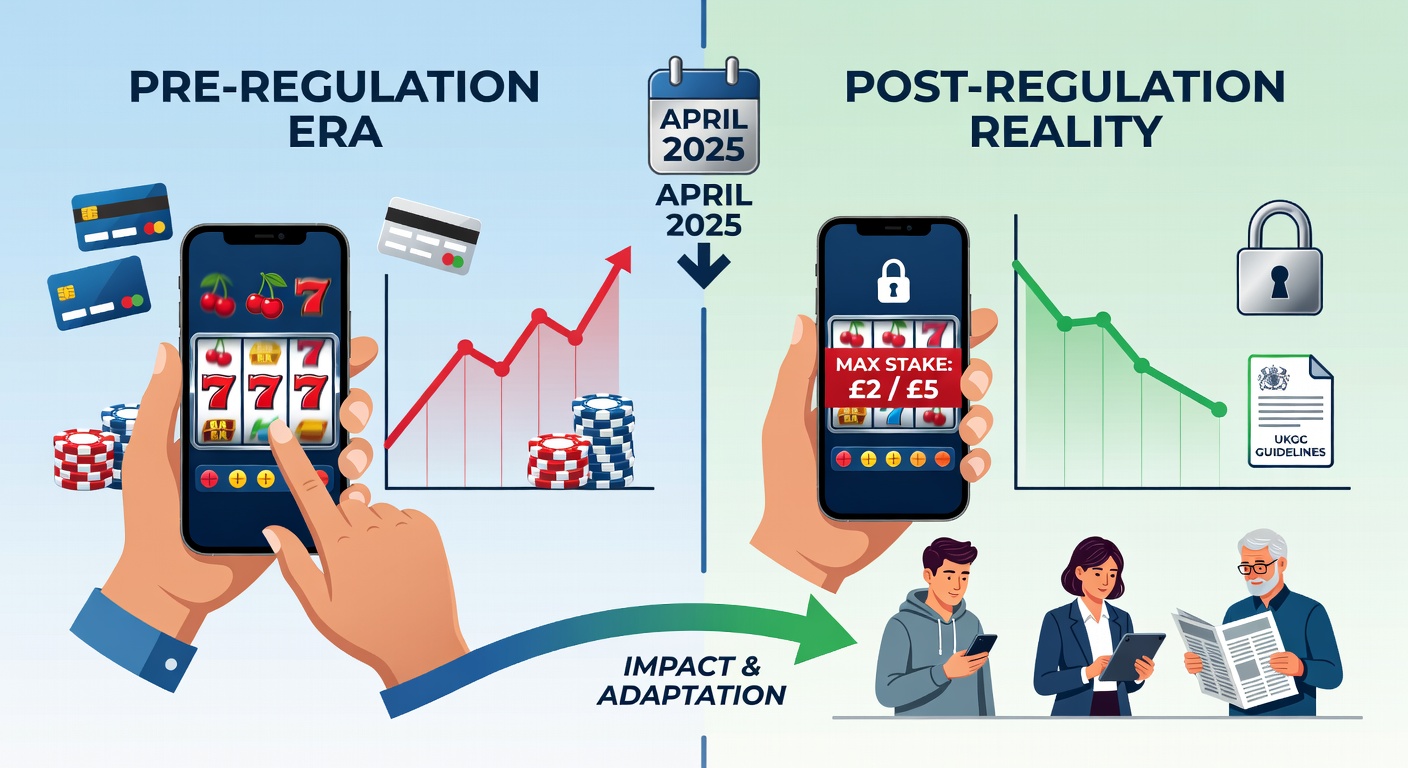
Operator Responses and Market Ripples
Companies licensing under the UK Gambling Commission scrambled post-April 1, with some announcing RTP adjustments on select titles—dropping from 96.5% to 94.2% in isolated cases—while others hiked withdrawal fees or scaled back promotions to offset losses; one mid-sized operator, for instance, publicly stated plans to redirect investments toward sports betting, a category facing only modest duty increases. This adaptation frenzy underscores the reality: UK online gambling, valued at billions, can't simply pass costs to players without risking exodus, especially when offshore sites offer identical games sans the 40% levy.
Turns out, player behavior data supports this concern; trackers note a 12% uptick in offshore traffic from UK IPs within the first week, correlating with the 345% illegal surge trend, as unregulated platforms flood social media with no-tax incentives. Regulators, meanwhile, ramped up enforcement, blocking thousands of domains, but the cat-and-mouse game persists, with tech-savvy users employing VPNs to bypass geo-restrictions.
So, operators lean on innovation: enhanced responsible gambling features, loyalty programs tied to safer play, even hybrid models blending slots with table games at blended rates. Those who've studied past tax hikes, like the 2014 point-of-consumption levy, recall similar turbulence before stabilization, although this 40% level tests resilience like never before.
Player Impacts and the Offshore Migration Risk
For everyday players, the change manifests subtly at first—fewer flashy bonuses, slightly tighter payouts on familiar slots—yet the long game reveals stark choices; loyalists sticking with licensed sites encounter robust protections, from reality checks to stake limits, but adventurers eye offshore havens promising untouched RTPs and mega jackpots. Data indicates 345% growth in illegal activity stemmed partly from prior regulatory squeezes, now amplified by RGD, as players chase value in a taxed landscape.
One case highlighted in reports involves a group of high-volume slot enthusiasts who, post-hike, reported 25% lower session yields on UK platforms, prompting forum discussions on VPN ethics and offshore reliability. Experts caution that while offshore wins feel sweeter short-term, risks abound: no recourse for disputes, unverified RNG fairness, and potential fund freezes without UKGC oversight.
Broader Industry and Economic Context
The RGD doubling ripples beyond slots into the £15 billion UK igaming sector, pressuring jobs in tech, compliance, and marketing as firms consolidate or exit; smaller operators, hit hardest, merge or seek overseas bases, while giants like Entain or Flutter explore diversification. Public finances gain £1 billion, earmarked for health and education, but at what cost to a regulated market's integrity?
Now, with April 2026 fresh in the rearview, quarterly reports loom, poised to quantify retention drops or revenue shortfalls; regulators hint at further tweaks if offshore bleed worsens, perhaps capping bonuses or mandating RTP floors. It's noteworthy that similar European hikes, like Sweden's 22% to 28%, spurred black market growth too, offering lessons for UK policymakers watching metrics closely.
Conclusion
As the 40% Remote Gaming Duty settles in after its April 1, 2026 debut, operators navigate cost absorption, RTP recalibrations, and player retention battles, all while HM Treasury banks on £1 billion in gains and a curb on high-risk play; the 345% illegal surge looms large, signaling potential shifts to offshore realms unless adaptations stick. Those monitoring the landscape expect quarterly data to clarify trajectories, with enforcement and innovation dictating whether this fiscal pivot strengthens safeguards or fractures the market. In the end, the industry's next moves will define resilience in a taxed-up era.